




The first month is the one nobody describes honestly. Most guides jump from the decision to the earnings and skip the four weeks in between, which are mostly administration, unfamiliar routines and money going out before any comes in. Knowing what that month actually contains makes it far less intimidating, and it prevents the two mistakes that cost new arrivals the most: starting without the paperwork, and assuming the first week is representative of anything.

Week one is paperwork, not work
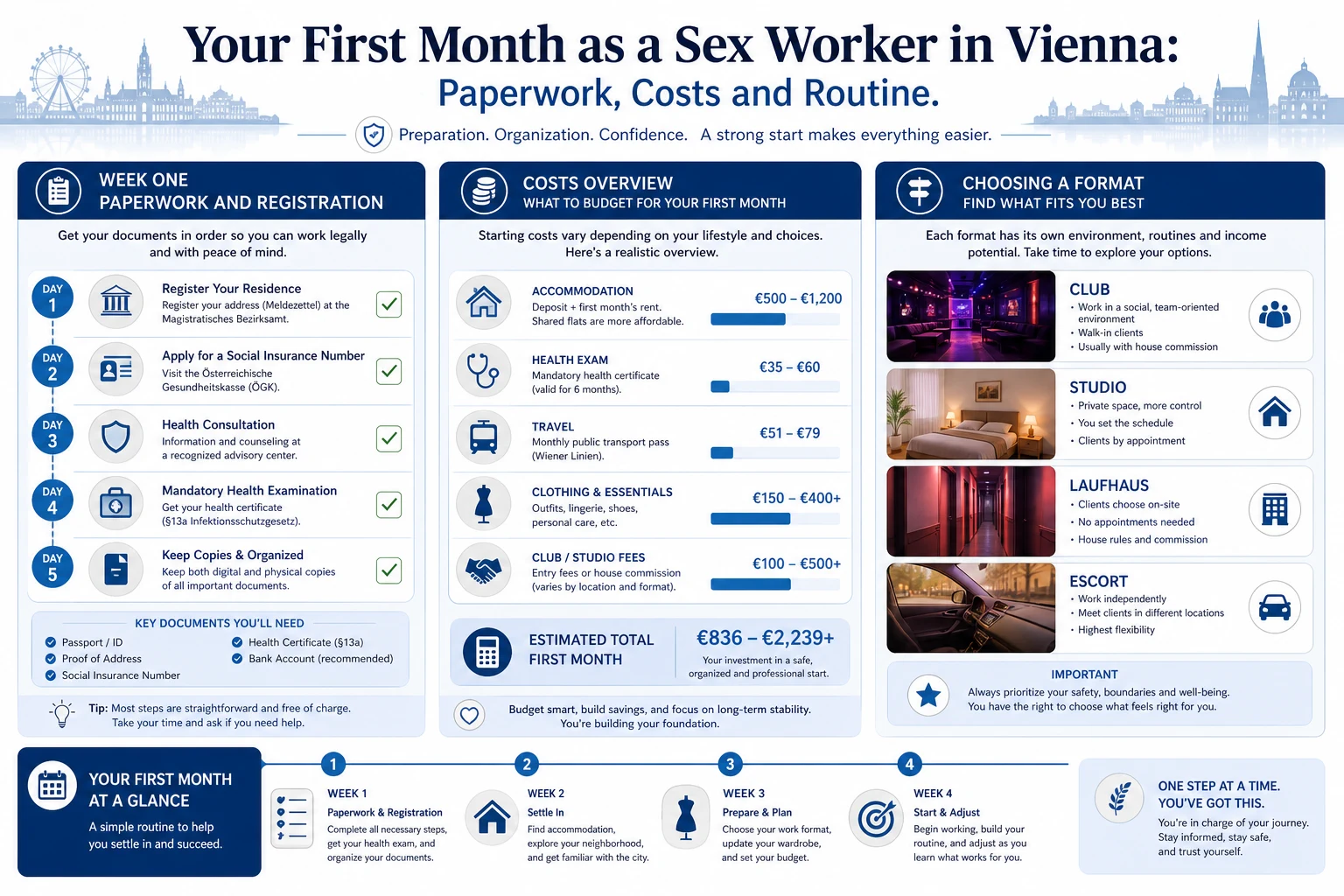
In Vienna the legal route begins with registration and the mandatory health examination, and no reputable house will put you on a shift without both. This is not bureaucracy for its own sake: the registration is what separates legal work with rights from illegal work with none. The practical steps are set out in how to get your licences and papers for sex work in Vienna, and the health side in how to apply for the Green Card health exam.
Plan for this to take days rather than hours, and plan for it to happen before you need income. Arriving with the expectation of working the same week is the single most common miscalculation, and it is the one that pushes people towards illegal arrangements out of simple impatience. The reasons that path ends badly are set out in why not to work illegally in apartments in Vienna.
The costs nobody mentions in advance
Your first month has expenses attached to it regardless of what you earn. Accommodation, the health examination, travel, working clothes and the daily cost of simply existing in a city that is not cheap. In a club model there may also be a room or shift arrangement to cover, depending on the house.
Write the whole list down before you arrive and add a reserve on top. Two weeks of living costs held back is the difference between choosing your first workplace and accepting the first one that will take you, and that difference shapes the following year. The realistic side of income includes the slow weeks, and any figure quoted without them is a sales pitch rather than a plan.
Choosing a format before choosing a house
Club, studio, laufhaus and escort work are different jobs with different rhythms, different costs and different kinds of client contact. Deciding which one suits you before you start applying saves a great deal of wasted effort, and it is easier than it sounds because the trade-offs are well documented in the pros and cons of the different sex job types in Vienna.
For a first month, a structured environment is usually the easier place to learn. A well-run house provides reception, security on site, clear house rules and colleagues who have answered every beginner question before. The reasons an established venue such as a reputable high class club is a common starting point are structural rather than glamorous: predictable rules, and somebody at the door.
Week two: the routine arrives
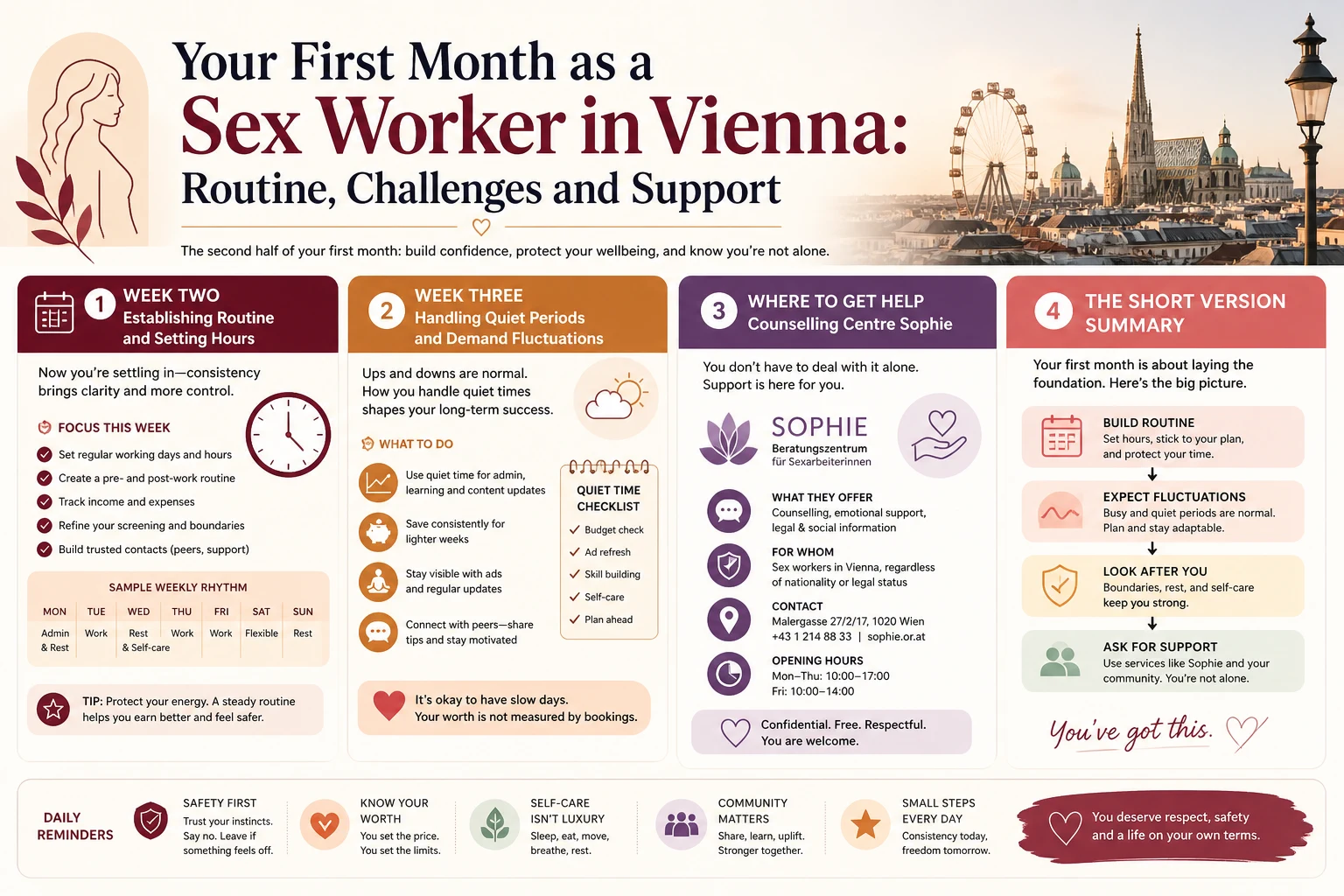
The second week is when the job starts to feel like a job. Shifts have a shape, the room has regulars, and the exhausting part turns out not to be the work itself but the hours: late nights, irregular meals and a sleep pattern that resists every plan. Most people underestimate this and try to keep their previous daytime life running alongside it.
Deciding your own hours early, rather than drifting into whatever the house suggests, is the habit that protects everything else. It is worth treating as a deliberate decision from the start, and it is the whole subject of setting working hours that do not burn you out.
Week three: the first quiet stretch
Somewhere in the third or fourth week there will be a bad night, then a bad two nights, and the conclusion will present itself that you have made a mistake. Almost always it is simply the week. Demand in this industry moves with the calendar, the weather and events in the city, and no individual night means anything on its own.
What to do with those hours is a practical question rather than an emotional one, and every experienced colleague has a list. Judging the work on a month rather than on a night is the discipline that keeps people in it long enough to earn properly.
Where to get help that is not a colleague
Colleagues are the fastest source of practical knowledge and a poor source for anything legal or medical, because their information is second-hand and often years old. Vienna has a counselling centre specifically for sex workers, Sophie, which offers free and anonymous advice including legal and insurance questions in several languages; the service is described at Sophie’s English information page.
Using it early rather than in a crisis is the point. Counselling and additional protection are treated as essentials in this profession for good reasons, as set out in why counselling and extra protection matter.
The short version
Your first month in Vienna is roughly one week of registration and health examination, one week of learning a routine, and two weeks of discovering that the income is uneven. Bring a reserve that covers two weeks of living costs, because it buys you the right to choose your workplace. Decide the format before you apply anywhere, and start in a structured house if this is new.
Set your own hours in week two rather than inheriting somebody else’s, expect a quiet stretch and do not read it as a verdict, and get legal and insurance answers from a counselling service rather than from the dressing room. Handled that way, the first month is administrative rather than dramatic, which is exactly what it should be.