




Burnout in this industry rarely comes from the work itself. It comes from the hours: nights that end at four, shifts accepted because they were offered, and a schedule that quietly expands until there is no week left. Nobody hands you a rota in a job where you are self-employed, which means the discipline has to come from you, and the people who last in this profession are almost always the ones who set that discipline early.

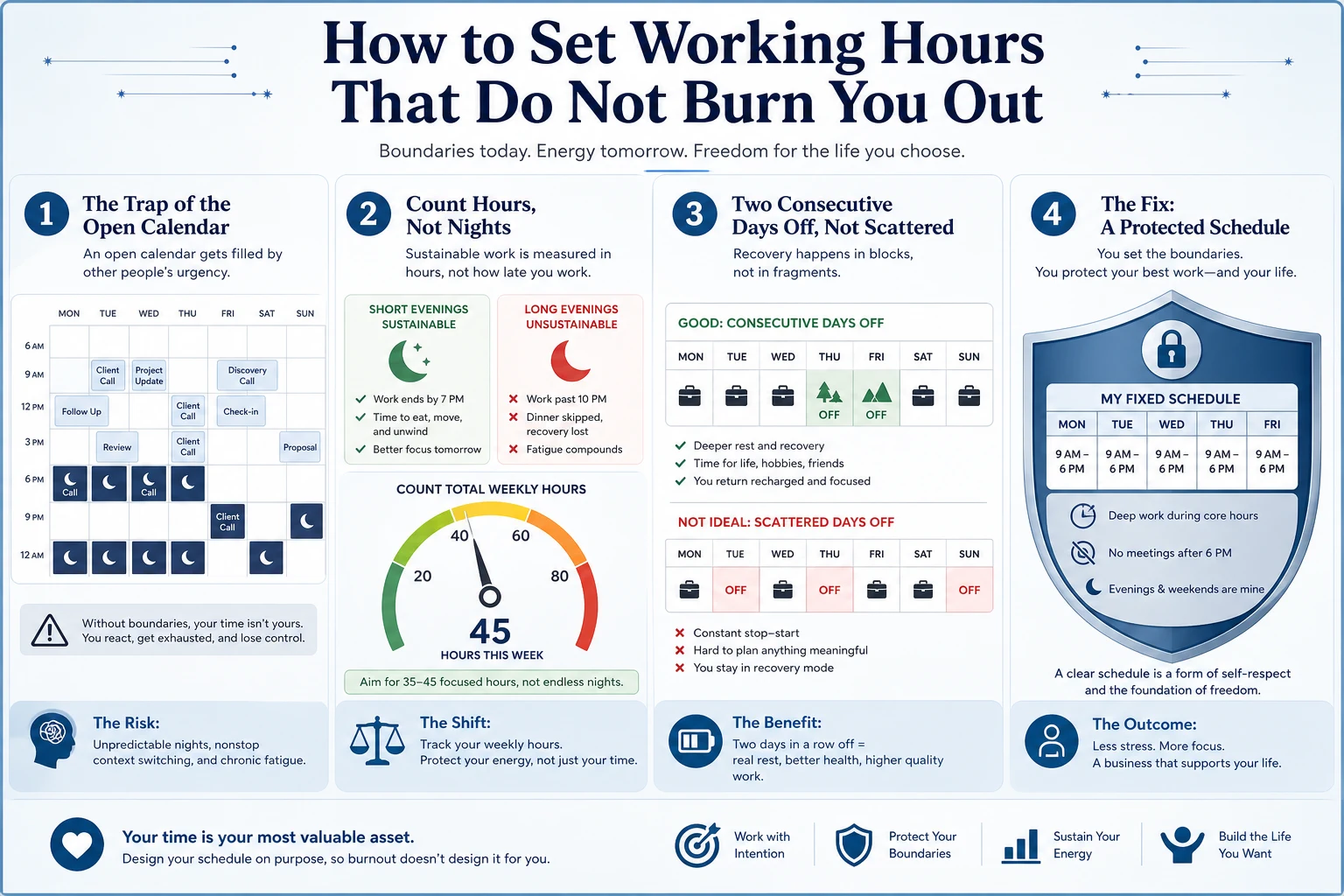
The trap of the open calendar
Working independently means every night is technically available, and that is the problem. An open calendar fills with the nights other people want rather than the ones that suit you, and each individual yes looks reasonable in isolation. Three weeks later the pattern is fixed, and unpicking it is much harder than setting it would have been.
The fix is unglamorous: decide your working days in advance and treat them as fixed, the way an employed person’s schedule is fixed. The structural side of this is one of the practical arguments in why working fully independently is harder than it looks: nobody else is protecting your time.
Count hours, not nights
Four short evenings and four long ones are not the same week, and treating them as equivalent is how people lose track. A useful measure is total hours on site per week, including the dead time at the start and the end, because that is what actually exhausts you. Most people find their sustainable number within two months and then ignore it.
Write the number down and check it weekly. It changes with the season and with the house, and it is worth adjusting deliberately rather than by drift. Demand itself moves through the week in ways you can plan around, which is part of what working through slow periods is really about.
Two consecutive days off, not two scattered ones
One day off after a late shift is recovery from that shift. Two consecutive days is the first time the week actually stops, and the difference in how it feels is disproportionate. Anyone working nights knows the first day off is spent sleeping and the second is the only one that resembles a life.
Scheduling those two days in the quiet part of the week costs the least income, which makes the decision easier than it looks. The nights that matter commercially are well known in every house, and the ones that do not are where your rest belongs.
Night shifts have a physical price
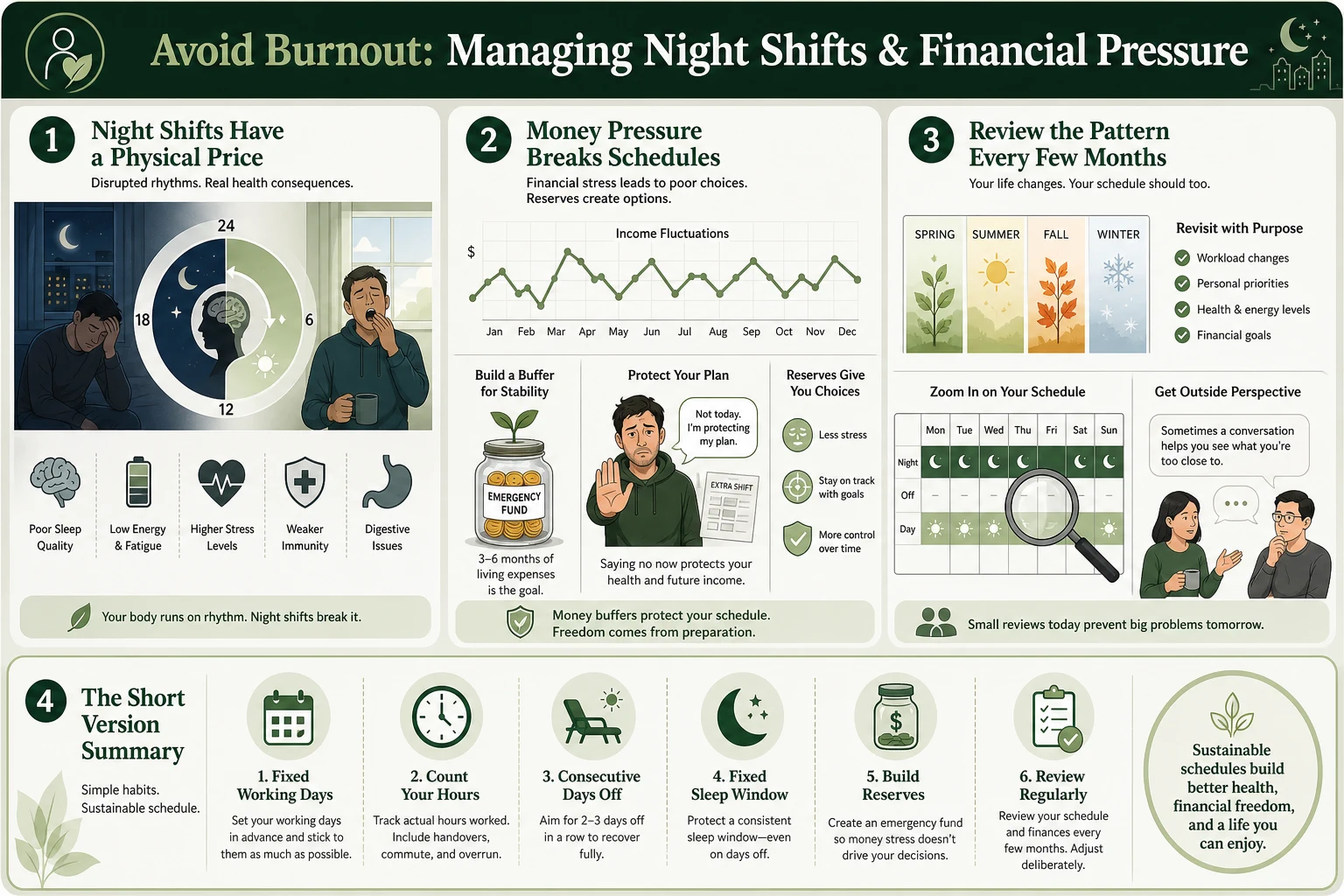
Irregular sleep, late meals and daylight arriving when you are going to bed take a measurable toll over months, and the effects accumulate quietly. This is not specific to sex work, it is true of every night profession, but it is rarely discussed here because the work itself attracts all the attention.
One practical response is a partial shift towards daytime hours, which suits some people’s bodies and some clients’ schedules better than they expect; the trade-offs are set out in why some sex workers in Vienna choose day shifts. Another is simply protecting a fixed sleep window and refusing to move it for a single good night’s earnings.
Money pressure is what breaks schedules
Almost every abandoned schedule is abandoned for the same reason: a bad week and a fixed bill. That is a budgeting problem wearing the costume of a scheduling problem, and it is solved with a reserve rather than with extra shifts. People with two months of costs saved say no to a badly timed shift without hesitation; people without it never can.
Building that reserve on uneven income is its own skill, and it is covered in budgeting on irregular income as well as in the practical suggestions in nine ways to save money while working in Vienna. Schedule discipline and financial discipline are the same discipline viewed from two angles.
Review the pattern every few months
What works in November does not work in July, and what worked in your first year may not suit your third. A schedule is a decision to be revisited, not a rule to be endured, and reviewing it deliberately every few months is what keeps it honest. If the answer is fewer hours, that is a legitimate answer.
Talking a schedule through with somebody outside the industry is often more useful than talking to a colleague inside it, and the same applies to the longer horizon: what the hours are for is the question behind saving for your post-career life as a sex worker in Vienna.
The short version
An open calendar fills itself with other people’s preferences, so set your working days in advance and treat them as fixed. Measure total hours on site rather than counting nights, and find your sustainable weekly number. Take two consecutive days off in the commercially quiet part of the week, because one day is only recovery.
Protect a fixed sleep window, consider whether daytime hours suit you better, and understand that most broken schedules are broken by money pressure rather than by ambition. Build the reserve that lets you say no, and review the whole pattern every few months instead of enduring it.