



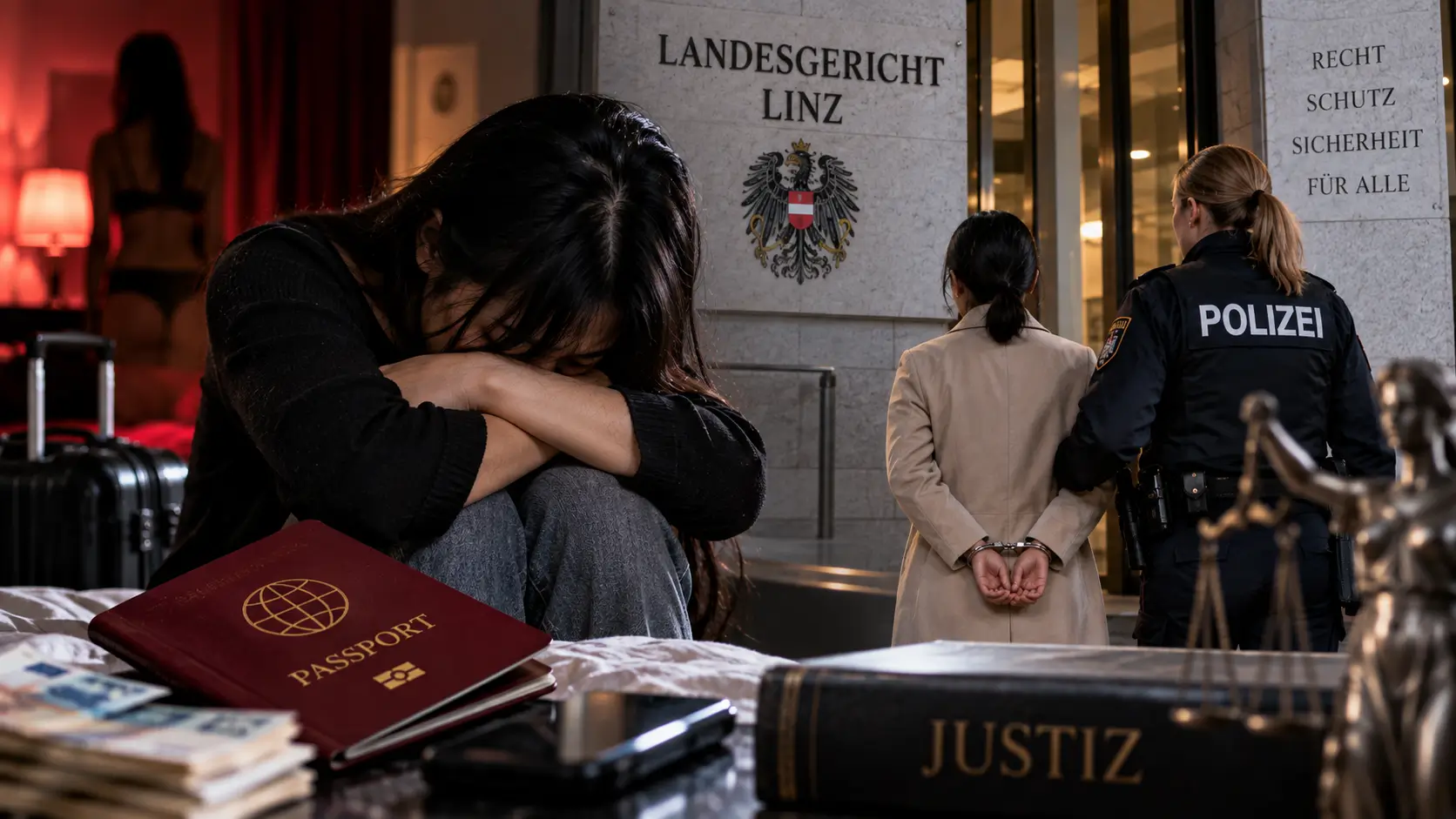
A human trafficking case in Upper Austria has revealed how women searching for legitimate work in Europe were instead drawn into a system of forced prostitution, financial exploitation and control.
A 57-year-old Chinese woman was convicted at the Regional Court in Linz and sentenced to 24 months in prison for her role in the operation.
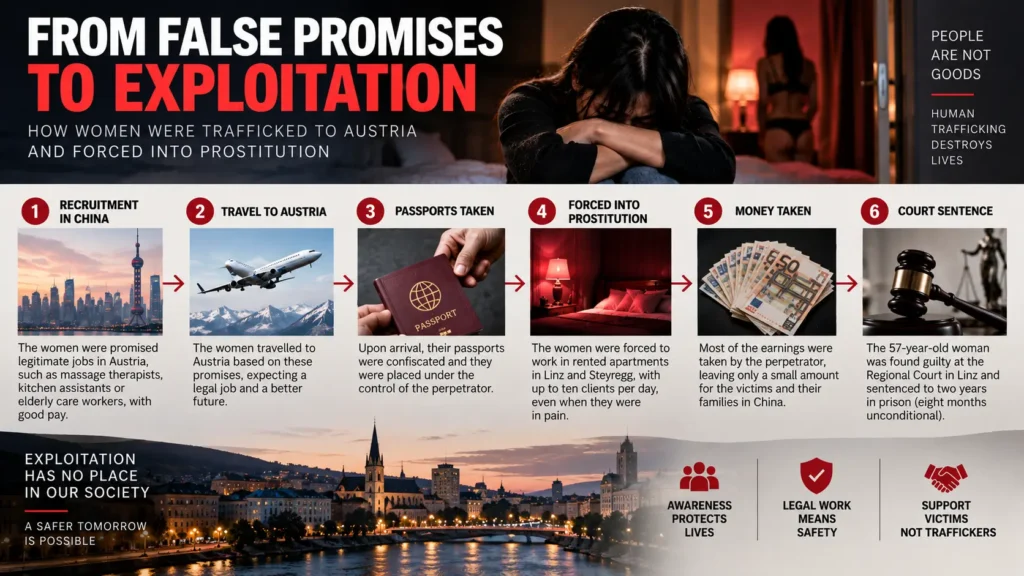
According to the case presented in court, heavily indebted women in China were promised well-paid jobs in Austria. They were told they could work as massage therapists, kitchen assistants or elderly care workers.
The reality after arriving in Austria was very different.
Passports Taken After Arrival
According to prosecutors, the women’s passports were confiscated and they were forced into prostitution.
The defendant allegedly rented at least four properties in Linz and Steyregg that were used for illegal prostitution and arranged clients for the women. She faced charges including human trafficking, pimping and money laundering.
The prosecutor described particularly harsh working conditions. Some victims reportedly had to see as many as ten clients in a single day and were expected to continue even when they were suffering from pain.
Most of their earnings were taken away, leaving the women with only limited amounts of money to send to their families in China.
Defendant Said to Be Part of a Larger Network
The defendant chose not to testify about the allegations during the proceedings.
Her lawyer argued that she occupied a relatively minor position within a much larger criminal structure and described her as being “more victim than perpetrator” within the organisation.
The court nevertheless convicted the 57-year-old and imposed a two-year sentence, eight months of which were unconditional.
The judge also acknowledged the wider structure behind the operation, saying that the masterminds were located in China and describing the defendant as only a small part of the organisation. Because she had already been in pre-trial detention since February and was granted early release, she was able to leave prison shortly after the verdict.
Human Trafficking Is Not Sex Work
Cases such as this demonstrate why human trafficking and consensual sex work should not be treated as the same thing.
The women described in the Linz proceedings were allegedly deceived about the jobs awaiting them, had their passports taken and lost control over both their working conditions and earnings.
Consent requires the genuine ability to say yes or no. When someone is threatened, deceived, controlled or prevented from leaving, that choice no longer exists.
This distinction is particularly important in Austria, where a legal adult industry exists alongside continuing efforts by authorities to identify trafficking and exploitation.
Why Legal Work Offers Greater Protection
For adults who voluntarily choose sex work, operating legally and in a reputable environment can provide an important layer of protection that underground prostitution cannot.
Legal work creates greater transparency. Workers are more visible to authorities and healthcare services, while legitimate establishments have stronger incentives to comply with regulations and maintain appropriate working conditions.
Most importantly, a sex worker should remain in control: choosing whether to work, deciding which clients to accept, keeping control of earnings and being free to leave.
Clients also have a role to play. Choosing legal and reputable establishments reduces the risk of financially supporting businesses or individuals connected with coercion and human trafficking.
The lesson from the Linz case is therefore not that sex work itself is the crime. Exploitation is.
A safer adult industry depends on maintaining that distinction: protecting people who freely choose the profession while identifying and prosecuting those who profit from people who never had a genuine choice.